
Moving out of a rental
End of Lease Cleaning Checklist — Room by Room
Quick answer: Work top to bottom and dry to wet, one room at a time, and leave the kitchen and bathroom for last so they stay clean once done. The areas most commonly missed are the oven, the exhaust fans, the window tracks, the skirting boards and marks on walls. Do those five properly and the rest is ordinary cleaning.
Most bond cleaning problems come down to a short list of items that almost everyone misses, on a day when you are exhausted and the removalists have already gone.
- End of lease clean
- From $423, live from our booking calculator, checked 15 October 2026
- Our record
- 1,731 completed end of lease cleans
What an End of Lease Clean Actually Has to Achieve
The standard is not "spotless". In every state and the ACT you must leave the home reasonably clean (in the ACT, in substantially the same state of cleanliness) and as close as you can to its condition at the start, fair wear and tear excepted. The exact wording differs by state.
The good news is that the list is short and it is predictable. Property managers inspect the same things in the same order, and they compare what they see against the condition report you signed on the way in — not against a professional standard. Knowing exactly what is on that list is most of the job.
Your entry condition report — the one you filled in during the first week and may not have looked at since — is the actual benchmark. That distinction matters in both directions:
- Fair wear and tear covers things that degrade through normal living: carpet worn along a hallway, paint faded by sun, a scuffed floorboard. You are not liable for these, and you should not spend the last day of your lease trying to fix them.
- Damage and neglect do not. Grease baked onto an oven, mould on a bathroom ceiling, marks from blu-tack, a stained carpet, a garden gone to seed — these are yours to put right.
Before you start, find your entry condition report and read it. If it noted a mark on the wall of the second bedroom when you moved in, that mark is not your problem now, and photographic proof of that saves an argument later.
For the state-specific rules, go to your own tenancy regulator: NSW Fair Trading, Consumer Affairs Victoria, the Queensland RTA, Consumer and Business Services in South Australia, the ACT Government's renting pages or Consumer Protection WA. Whether a professional clean can be required, and what each state says about carpets, is in do you need professional end-of-lease cleaners?, with a moving-out guide for NSW, Victoria, Queensland, WA, South Australia and the ACT.
The Order That Saves the Most Time
Most people clean room by room in the order they walk through the house, and end up re-cleaning half of it. The efficient sequence is:
Empty the property completely first.
Every cupboard, the garage, the top of the wardrobe, the meter box. You cannot clean around boxes and you will not get the corners.
Top to bottom, always.
Ceilings, cornices and light fittings first; floors last. Anything you knock loose falls onto a surface you have not cleaned yet.
Dry work before wet work.
Dust, cobweb and vacuum the whole property before any water comes out. Dust plus water equals mud, and mud on a skirting board is worse than the dust was.
Bedrooms and living areas, then laundry, then bathrooms, then kitchen.
The wet rooms take the longest and are the most likely to be re-dirtied by traffic, so they go last.
Floors as the final pass,
working backwards toward the front door.
Set aside a full day for a two-bedroom property if you are doing it yourself, and closer to two for anything larger. It is consistently longer than people expect — the oven alone is an hour of waiting.

Arrange removalists before an empty-property clean. Allow time to check the work and deal with concerns; carpet drying and any return visit depend on the property, conditions and access.
Read the illustration as text
- Move belongings out
- Clear the rooms and arrange access, water and electricity.
- Complete the booked clean
- Leave room for carpet drying if extraction is also booked.
- Check and record the result
- Walk through, take dated photos and arrange the key handover.
Leave a buffer before inspection and keys.
The checklist, room by room
Tick items as you go; your ticks stay on this device. Print it if you would rather work from paper.
Every step in this view is ticked. Untick ‘Hide steps I’ve ticked’ to see them again.
Every room: the baseline
These apply in every room and are the most commonly missed items on an inspection report.
Corners of ceilings, cornices, around external door frames, in the garage.
Remove covers where safe, wash out the insects, wipe the fan blade tops.
Pull, wash, dry fully, refit. A split system filter is an inspection item and it is nearly always forgotten.
Dusted; test them and replace flat batteries.
Spot-clean marks, and remove every hook, screw, adhesive strip and blu-tack shadow. Fill and touch up nail holes if your lease requires it.
A damp cloth along the full length, not just the visible runs. One of the areas most often missed.
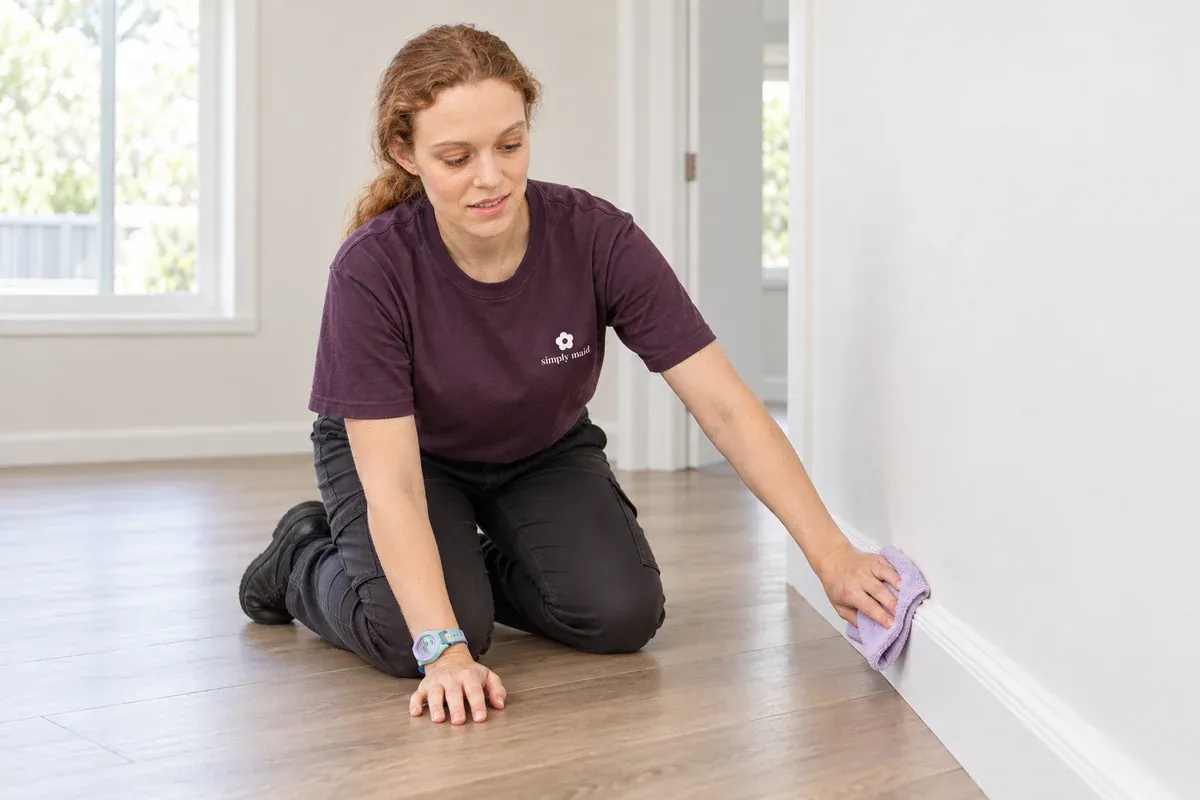
Both faces, and the top edge, which nobody wipes and every inspector runs a finger along.
The plate and the surround; they carry more finger grime than anything else in the room.
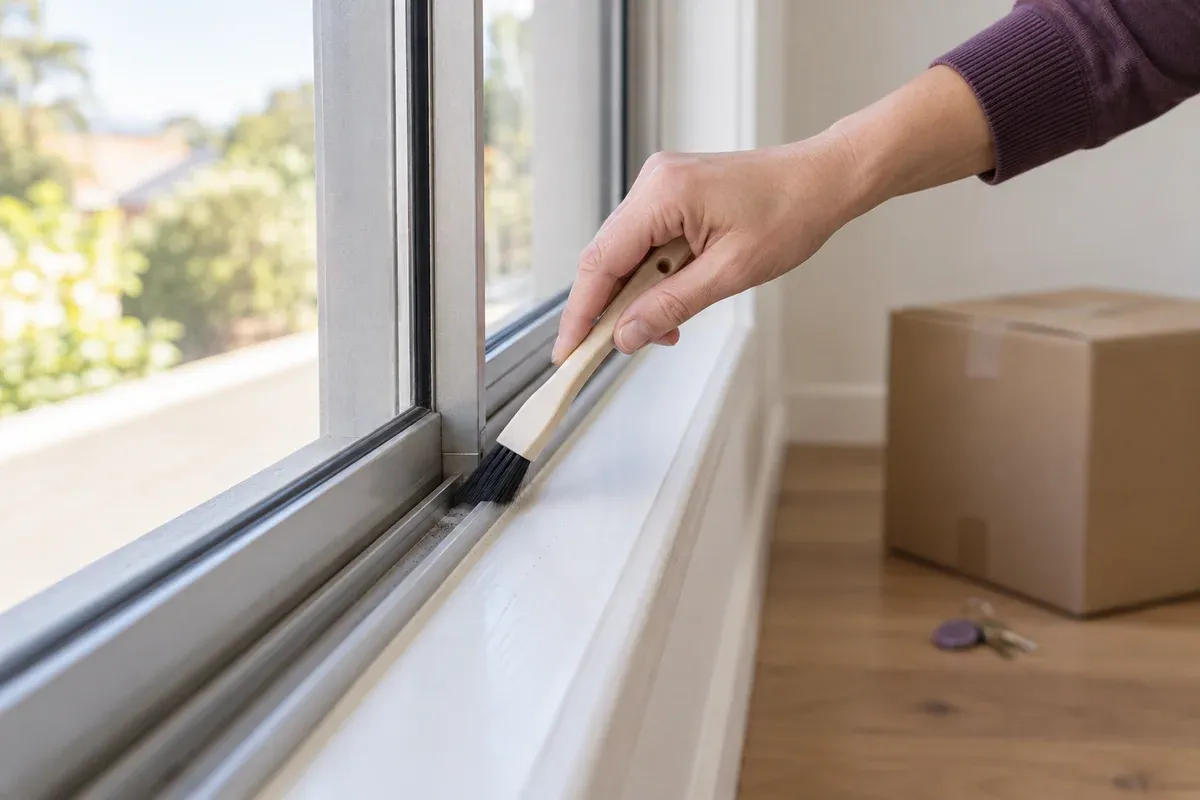
Inside and out where reachable, plus tracks and sills. Vacuum the track first, then a damp cotton bud or a small brush along the groove.
Brushed or hosed down.
Blinds wiped slat by slat; washable curtains laundered per their label.
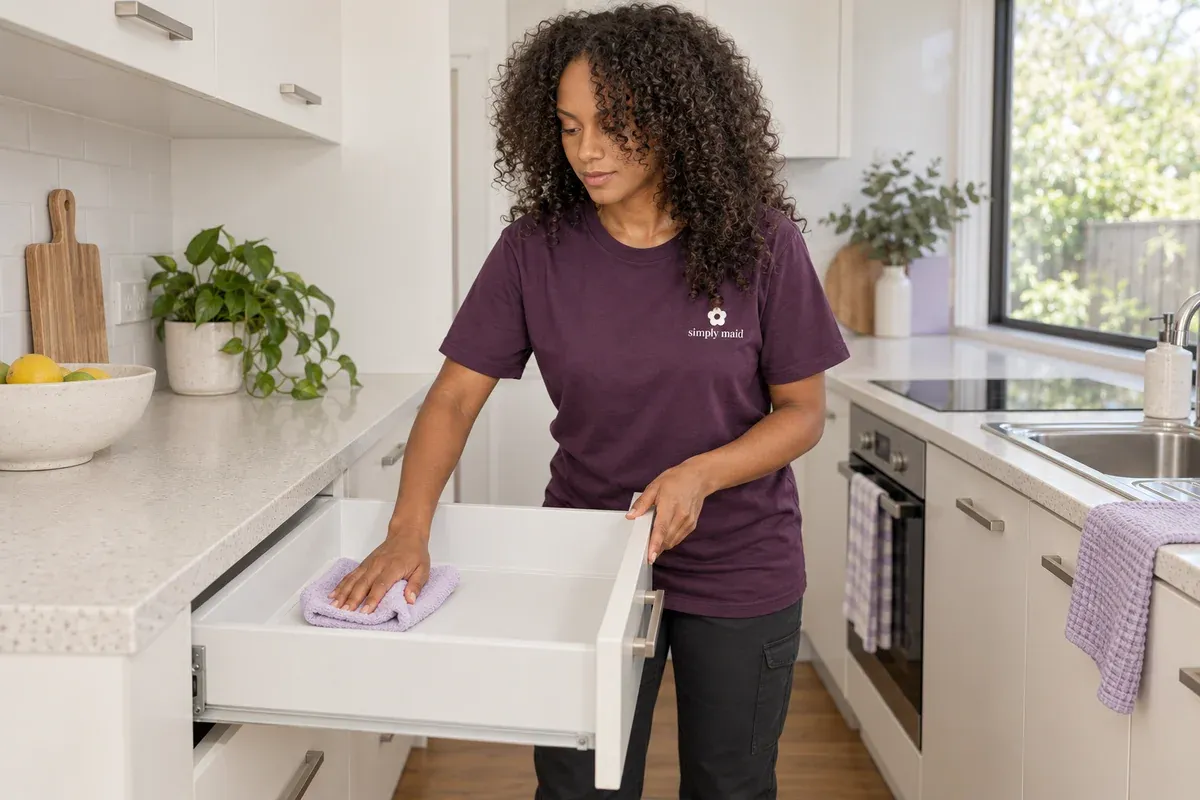
Inside, including the shelf above and the runners below.
Vacuumed thoroughly, then mopped or steam-cleaned to suit the surface.
Kitchen
Plan time for the kitchen’s actual condition, including the oven and grease on accessible surfaces. Read each product’s instructions before starting; contact time and suitability vary.
In hot water with dishwashing liquid, or in the bath on an old towel if they will not fit in the sink.
For the time on the label — usually a few hours, sometimes overnight. Ventilate the room and wear gloves.
Two moderate applications beat one aggressive scrub.
Including between the panes if the door dismantles, and the seal around the frame.
Only if it is a freestanding oven designed to slide out; follow the manufacturer's instructions and leave connected or built-in appliances where they are.
Filters degreased (a hot soak with dish soap and bicarb soda), the hood body and the underside where grease collects.
Including the burner caps, the trivets, and the recess underneath a gas cooktop.
Full height, warm degreaser, wiped dry.
Inside and out, and the tops of the overhead units, which are almost always sticky with airborne grease.
Including the join at the wall and under any appliance that lived there.
Descaled, polished dry, plus the plug hole and the drain flange.
Filter cleaned, seal wiped, an empty hot cycle run.
If the fridge stays, clean inside, defrost the freezer, and clean underneath and behind.
Washed out and deodorised.
Bathroom, ensuite and toilet
Check the glass, coating, frames and adjacent materials before treating soap film or mineral deposits. Use a compatible method; vinegar is not suitable for every shower.
Scrubbed, with the grout lines brushed rather than wiped.
Clean them, but if they are black through or coming away, cleaning will not restore them. Resealing is a repair, not cleaning: note it on your report and ask your agent before doing it.
Surface mould on the ceiling, in the corners and on the seals. If it keeps coming back despite airing the room, or comes from a leak, report it to your agent or landlord rather than treating it as cleaning.
Cover removed, washed, and the fan itself dusted. Another near-universal miss.
Including the underside of the rim and the overflow plate.
Inside the cupboard and drawers, the basin, the tap base, and the mirror streak-free.
Bowl including under the rim, the seat both faces and its hinges, the cistern, the base, and the flooring behind it.
Descaled and dried. Chrome shows water marks the moment it dries on its own.
Dusted and wiped.
Mopped, corners included.
Laundry
If they stay: the lint filter, the detergent drawer, the door seal, and the drum.
Clear.
Inside, under the rim, and the tap.
Where an appliance is yours and safe to move, or designed to slide out; follow the manufacturer's instructions, and leave plumbed-in or built-in appliances in place.
Inside and out.
Bedrooms and living areas
Shelves, rails, runners, and the floor of the robe.
Vacuumed thoroughly, edges included. Professional steam cleaning is needed only where your state's rules let a lease require it, most often after an approved pet.
Cleaned to suit the surface. Do not steam-mop timber.
A magic-eraser pad lifts most scuffs, but test first: it is a fine abrasive and it can burnish flat paint into a shiny patch that is more obvious than the mark.
Streak-free.
Swept, with the railing wiped and the drain clear.
Outside, garage and garden
Often skipped entirely, and often the difference between a full bond and a partial one.
Floor swept, cobwebs cleared, oil stains treated.
Mowed and edged within a few days of the final inspection.
Weeded.
Swept; pressure-washed if that is how you received it.
Emptied, rinsed, and left in the correct spot.
Emptied.
If there is one, cleaned and balanced to the standard in your lease.
Hooks, shelving, garden ornaments, a vegie patch. Remove it and restore what was there.
Safety
Never mix cleaning products. NSW Health: "Never mix household bleach with ammonia or any other cleaner." Ventilate the room during and after use. Wear gloves and eye protection. Follow the label's dilution and contact time.
In an emergency call 000. For poisoning advice call the Poisons Information Centre on 13 11 26 — 24 hours, anywhere in Australia.
The Five Areas Most Often Missed
If time runs out, spend it here. These are the spots our cleaners most often find missed in a self-clean, not a measure of what agents deduct.
- The oven. The slowest job in the house, and the hardest to rescue on the day.
- Exhaust fans, in the bathroom and the rangehood. Visible from directly below and never done.
- Window tracks and sills. An inspector will open a window. They all do.
- Skirting boards and door tops. The finger-run test is real.
- Marks, hooks and adhesive residue on walls. Removing a hook and leaving the hole with a grey halo around it reads worse than leaving the hook. For ordinary dust and marks on paint, follow our gentle wall-cleaning method and test first. Paint repairs and adhesive removal need separate assessment.
Should You Do It Yourself or Book a Bond Clean?
Honestly: it depends on your lease and your week.
Do it yourself if you have a full day free after the property is empty, you kept on top of the oven and the bathroom during the tenancy, and you have no pet approval with a professional carpet-cleaning condition. The materials cost around $50 and the result is entirely achievable.
Book it if it is required in your circumstances under the applicable tenancy rules, or you need practical help with the agreed work. Read your state guide and compare the booking’s inclusions, exclusions and timing. A return-clean policy does not guarantee a bond outcome or remove every risk; check its eligibility, reporting deadline and return arrangements.
If you would rather hand the list to someone else, that is what our end of lease cleaning service is for. Either way, take dated photographs of every room once you finish. They cost nothing and they end most disputes before they start.
If you decide to hire a cleaner, compare your options: End of lease cleaning providers in Australia compared. Compare move-out providers’ inclusions, carpet extras, inspection timing and re-clean conditions.
Questions people ask
What is included in an end of lease clean?
A full interior clean of every room — oven, rangehood, cupboards inside and out, bathrooms including shower screens and exhaust fans, all windows with tracks and sills, skirting boards, doors and frames, wardrobes, light fittings, and all floors. Carpet steam cleaning and outdoor areas are usually quoted separately, so check what your lease requires before you book. Ours covers interior window glass, tracks and frames, not exterior windows; carpet steam cleaning can be added. Our end of lease cleaning page lists everything included.
How long does an end of lease clean take?
We book 4h 50m of cleaner time for a two-bedroom, one-bathroom end of lease clean; a team of two shares that time, so they're on site for about half as long. A heavily used oven or a larger home takes longer. Doing it yourself, allow a full day for a two-bedroom and two days for a family home — the oven alone needs several hours of product dwell time.
Do I have to get the carpets professionally cleaned?
Not in every case. In NSW a lease can require professional carpet cleaning only when you had an approved indoor pet, and in Queensland the RTA says a term requiring a professional clean or a receipt breaches the Act; a valid pet condition is the exception. The rules differ in each state, so check yours. Where it is not required, a thorough vacuum meeting the entry condition report is enough.
Can a landlord keep my bond for cleaning?
Only for the reasonable cost of cleaning what you didn't leave reasonably clean, judged against its condition at the start, and they must be able to back the claim with evidence. In the ACT the Act's list of bond deductions doesn't name cleaning, so ask ACAT or a tenants' advice service if one is claimed there. If you disagree, your state's bond dispute process decides, which is why the entry condition report and your own dated photographs matter so much.
What do property managers check first?
The shower screen, the oven, and the window tracks, in roughly that order. All three show neglect instantly and none of them can be rescued with a quick wipe on the day.
Is a bond clean the same as a deep clean?
No. A deep clean restores a home you are still living in. A bond clean is measured against a document — your entry condition report — and covers items a deep clean often skips, like inside empty cupboards, window tracks and the wall behind the oven.
When you're ready
Short on time? Book the end-of-lease clean
Moving is enough on its own. If you would rather not spend your last day scrubbing an oven, our team does bond cleans every day of the week. Nothing is booked or paid at this step.
Want the price table first? End of lease cleaning costs
Sources
The laws, regulators and services this guide relies on, with the date we read each one.
- Moving out of a rental home, NSW Fair Trading. Read 5 October 2026. End-of-tenancy obligations, condition reports and the fair wear and tear standard in New South Wales.
- Renting, Consumer Affairs Victoria. Read 5 October 2026. Victorian end-of-lease cleaning obligations and the bond claim process.
- Vacating a property, Residential Tenancies Authority. Read 5 October 2026. Queensland move-out checklist and exit condition report.
- Residential Tenancies Act 2010 (NSW), NSW Legislation. Read 5 October 2026. Carpet-cleaning terms: s 19(2)(a) and s 73E.
- Residential Tenancies and Rooming Accommodation Act 2008 (Qld), Queensland Legislation. Read 5 October 2026. Professional-cleaning and receipt terms: s 171.
General information, not legal advice. Tenancy law differs by state and changes; check the official source for your state before you act.