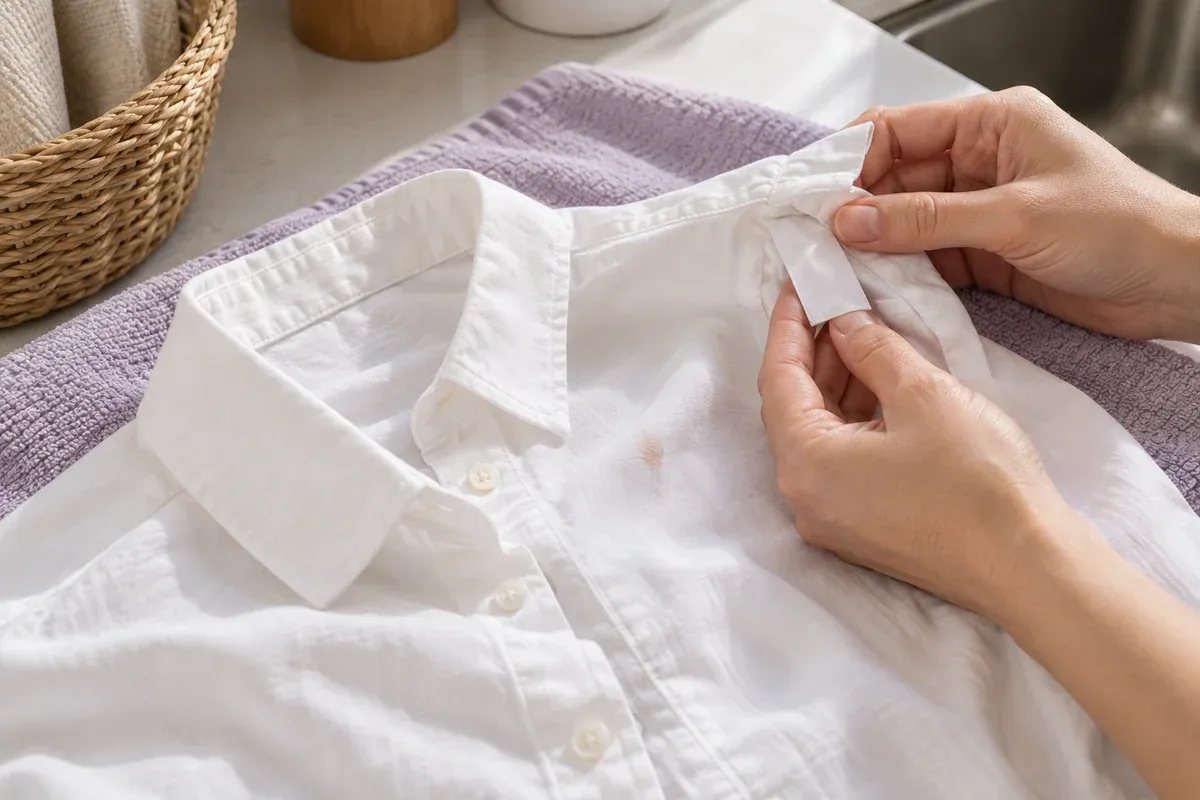
To store a wedding dress, first establish what cleaning its fabric, lining and decorations can safely tolerate. Then choose storage that supports the gown and suits its condition. A sturdy modern dress and a fragile heirloom may need different care.
Following an old Xpress 2 U link? This is a Simply Maid care guide. Simply Maid does not provide Xpress bridal cleaning, gown collection, repairs or preservation quotes. The questions and handover record below help you prepare for an assessment by a bridal cleaning specialist or textile conservator.
You may want to wear the dress again, sell it, alter it or keep it as a family piece. Start with that decision. It gives the person assessing your gown a clearer brief than “make it like new”, and helps you decide what work is worthwhile. This guide draws on textile-conservation and care-label guidance; it does not report a Simply Maid gown-cleaning test or treatment service.
Before booking: identify the whole dress
Photograph the front and back, the hem, any marks and all care labels. Record what you know about spills and anything already applied to them. Include detachable sleeves, a belt, veil or overskirt in the inventory if you want them assessed too. Keep the label attached.
Australian care labels provide instructions through words or symbols, covering matters such as washing, drying, ironing and professional care. Use these instructions as your starting information when contacting a specialist. ACCC care-labelling guide.
If the label is missing, ask the maker or retailer whether they can identify the materials and supply care guidance. Tell the specialist when the dress has mixed materials or attached decoration, rather than treating the outer fabric as the whole garment. For a fragile inherited gown, seek a textile conservator's assessment. In Australia, textile conservators work with historic clothing and other textile objects. Australian Institute for the Conservation of Cultural Material.
Separate cleaning, repair and storage in the quote
“Preservation” is not a sufficiently detailed instruction on its own. Ask the provider to write down what their package includes. You may be comparing very different work under the same label.
Part of the job | What to ask |
|---|---|
Assessment | Will someone inspect this gown before confirming the treatment and price? |
Cleaning | What method is proposed, and why does it suit the fabric, lining and trims? |
Repairs | Are loose beads, damaged seams or tears included, separately quoted or excluded? |
Results | Which marks may remain? What changes or risks have been identified? |
Packaging | What will support the gown, and what materials will touch it? |
Return | Can you inspect the gown and receive written storage instructions? |
Logistics | What are the collection, delivery and completion arrangements? |
Ask for an itemised quote after assessment where possible. A price for a plain gown is not necessarily a useful comparison for a heavily embellished one. This guide does not give a universal cost or turnaround: obtain those for your dress and your intended use.
Avoid relying on a blanket promise that a wedding dress must always, or must never, be dry cleaned. Conservation guidance treats suitability as a question of condition and material compatibility, including attached components. It does not support choosing one process for every gown. The guidance concerns museum textiles, so use it to frame questions rather than as instructions for treating a modern dress yourself. Canadian Conservation Institute: commercial dry cleaning of museum textiles.
Make a gown handover record
Copy this record into a document, or print this page's handover table. Complete the first column before an assessment, then ask the provider to confirm the second. It is an organisational aid, not a substitute for a condition report.
Your record | Provider confirmation |
|---|---|
Dress maker, style and approximate purchase year | Gown and accessories received |
Photos of labels, whole gown and problem areas | Materials and condition assessed |
Mark location and known cause; write “unknown” where needed | Proposed treatment and limitations |
Products or treatments already attempted | Existing damage recorded |
Loose decoration, tears or other concerns | Repair scope and exclusions |
Accessories included | Itemised quote and any approval needed for extra work |
Goal: wear, sell, alter or retain | Expected completion and return arrangements |
Deadline, if there is one | Storage materials and inspection advice |
Keep copies of the record, quote and before-and-after photographs together. Write down questions while the dress is being assessed; it is easier to resolve an unclear inclusion before work begins.
Choose storage for the gown's condition
Flat storage spreads a textile's weight and is particularly useful for heavy, decorated or fragile pieces. Use a container large enough to minimise folding, and support unavoidable folds with suitable padding. Unbuffered acid-free tissue or appropriately prepared clean cotton can separate and support textiles. Do not pack heavy objects on top of the gown. Canadian Conservation Institute: flat storage for textiles.
Ask the person assessing the gown to demonstrate how it should sit in its packaging. Take a photograph of the arrangement with their permission. That creates a useful reference when you later inspect or repack it.
Hanging, a garment bag or a box?
For long-term storage, the V&A advises against leaving a wedding dress on a hanger, where its weight can strain the garment. Its guidance recommends a suitable box with acid-free tissue and warns against ordinary plastic garment covers for prolonged storage. Keep the package away from light and unsuitable attic conditions. V&A: caring for vintage wedding dresses and veils.
That does not mean every plastic container is unsuitable. Conservation guidance distinguishes appropriate polyethylene or polypropylene containers from unsuitable storage materials. Ask what a proposed box is made from and what will touch the dress; “plastic” alone does not answer the question. Canadian Conservation Institute: flat storage for textiles.
Choose the location, then plan inspections
Think about where the package will live before buying it. An accessible interior cupboard makes periodic checks more practical than a place you rarely enter. Consider light, temperature, humidity, pests and physical support together. Light damage to textiles accumulates, and suitable packaging cannot undo damage that has already occurred. Canadian Conservation Institute: textiles and the environment.
The V&A recommends checking stored wedding dresses at six-month intervals and unpacking and repacking annually. Ask a conservator how to adapt handling for a particularly fragile gown. During a check, note any change and seek advice if you are unsure what it means; do not start an improvised treatment. V&A storage guidance.
Set a reminder when you put the dress away. Record the inspection date and anything that has changed, rather than relying on memory from one year to the next.
Common questions
Can an old yellowed dress be restored to white?
An assessment is needed. Ageing, condition and previous treatment affect what is possible; old stains may not be removable. Storage is protective care, not a promise to reverse existing changes. Ask what improvement is realistic and what risks treatment would introduce. V&A guidance on vintage gowns.
Should I try a stain treatment before sending it away?
For this guide's purpose, stop at documentation and assessment. A general stain-removal recipe does not establish compatibility with your particular gown. Our guide to stains on everyday washable clothing serves a different need; do not transfer those methods to a wedding dress without suitable care guidance.
What if I want to sell or wear it soon?
Tell the assessor. Your deadline and next use belong in the brief, alongside any cleaning or repair concerns. Ask how to store and transport it until then, and what should be checked before it is worn again.
Can Simply Maid arrange the old Xpress bridal service?
No. This guide does not offer that former service or a preservation quote. Take the handover record to a suitable bridal specialist or textile conservator and confirm their current services directly.
For other everyday fabric-care topics, browse our laundry guides.
Editorial note
By Huy Hoang. Prepared with AI assistance and reviewed by Huy Hoang before publication. This guide draws on the linked care-label and textile-conservation sources; it is not a report of gown treatment performed by Simply Maid.
Change log
Who wrote and edited this article, when its sources were checked, and what changed.