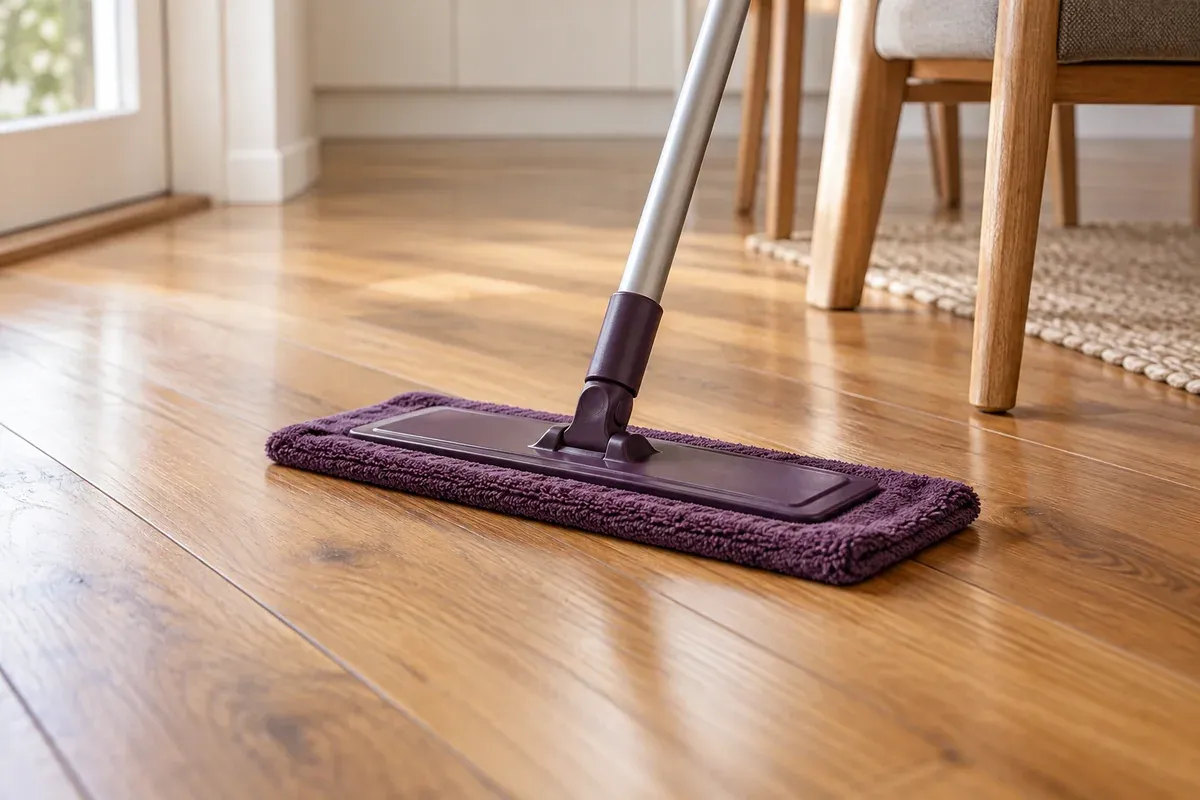
Care for an oiled timber floor by identifying its finish, using the maker's approved cleaning routine and treating maintenance oil as a separate task. Hardwax oils and penetrating oils are not interchangeable systems, and a product suitable for one may be unsuitable for another.
This guide provides a current starting point for readers following Anro Floorcare's old timber-care PDF. It does not republish the November 2012 sheet or extend its instructions to every modern product. If you are unsure what finish you have, start with our timber floor care guide.
Before the first clean
Write down the exact finish name and product number, who applied it and when. Get the current care instructions for that product and confirm that they cover your flooring material. Keep the label, technical sheet and safety sheet together so the person cleaning the floor can follow the same routine.
For recently oiled floors, ask the installer when moisture cleaning, rugs and normal furniture use are permitted. Do not replace that advice with a generic drying time from an old PDF. Weather, the coating system and the work actually performed can affect the handover instructions.
A routine for a confirmed Livos oil finish
Livos Australia's timber-floor care article recommends dry cleaning while the oil cures. Afterwards it specifies a slightly damp, rather than wet, mop and a suitable oil-floor cleaner. It names TRENA 556 for cleaning and GLANOS 559 for periodic care, with different roles. Follow the current label for dilution and frequency; more concentrate is not a shortcut to a cleaner floor.
The same guidance recommends cotton cloths or mops and advises against microfibre for its oil system. It also warns against steam, excessive water and household mixtures such as vinegar or baking soda. Do not transfer a generic microfibre or steam-cleaning recommendation to this finish. Read Livos Australia's timber-floor instructions for the complete product-specific routine.
Before beginning, clear a manageable area, check that your equipment is clean and make sure you can leave the floor undisturbed for the time specified. If the finish reacts unexpectedly, stop and contact the supplier with the product name and photographs instead of trying another cleaner over it.
Choosing products
Choose by the task and confirmed finish. Use this checklist when reading a label or speaking with a supplier.
Task | What to ask for | What to check before use |
|---|---|---|
Routine cleaning | Cleaner approved for the named finish | Dilution, cloth or mop type, rinsing and drying directions |
Periodic surface care | The system's specified care product | Whether it leaves a care layer and how often it is allowed |
Refreshing worn oil | A compatible maintenance treatment | Surface preparation, colour, application and return-to-use instructions |
Repairing a scratch or stain | Advice for the precise coating and damage | Whether a local repair is appropriate and how to test its appearance |
Restoring unknown or heavily worn floors | A flooring assessment | Existing coatings, floor construction and available repair options |
KUNOS 1862 is one example of a maintenance product, not a universal floor cleaner. Livos' March 2025 technical sheet lists compatibility with specified KUNOS, ARDVOS and KOIMOS treatments. It requires a clean, dry surface and a test application; abrasive pads can affect pigmented finishes. Confirm that the Australian product you have and its current instructions match before applying it. See the KUNOS 1862 technical sheet and Livos' technical-document directory.
Fire safety: cloths and pads containing drying oil can ignite through self-heating. Follow the product's handling and disposal directions immediately. The KUNOS sheet specifies airtight metal storage or immersion in water for contaminated materials; never leave oily cloths in a heap. Follow local waste requirements for disposal.
Record the product and date whenever maintenance is performed. Give those details to the next cleaner or contractor. Keep ordinary cleaning supplies separate from maintenance treatments so they are not confused.
When the floor needs more than cleaning
Take note of dull areas, uneven appearance and the locations where wear returns. These observations help a supplier decide what to investigate; they do not identify the cause by themselves.
Livos' rejuvenation guidance separates cleaning and drying from re-oiling and describes different preparation for different floor conditions. Use its rejuvenation instructions to discuss the work with your installer. Do not start machine buffing or sanding based only on a photograph or a general cleaning article.
Questions
Will oil stop all scratches?
No finish should be treated as a promise of a scratch-free floor. Ask the manufacturer what wear and repair expectations apply to your exact product. An isolated mark, a worn coating and damage to the timber can need different responses; record what happened before choosing a repair.
Can I use the same cleaner on polyurethane or engineered flooring?
Use the instructions for that finish and flooring product. ATFA distinguishes oil and wax care from film-coating maintenance and says cleaning methods must suit the system. A shared timber appearance is not evidence of compatibility. ATFA floor care and maintenance.
Does “natural oil” mean it is suitable for everyone?
A marketing term does not replace the ingredient information, label or safety sheet. If odour, an ingredient or a personal sensitivity matters, ask the supplier for the current documents before choosing a product. This guide makes no chemical-free, allergy-safe or health guarantee.
What about gaps, cork, concrete, furniture or decking?
Photograph changing gaps or movement and seek a flooring assessment; do not assume cleaning or adding oil will resolve them. Cork and parquetry need care appropriate to their construction and coating. Furniture, concrete and exterior decking have separate requirements: use Livos' care directory to find the relevant material guidance rather than applying this indoor-floor routine to all of them.
Is this the former Anro business or its original PDF?
This is a new Simply Maid guide. The historical Anro section explains the old links and the limits of the connection. For a former installation, the original job paperwork is the best place to identify which product was used.
Continue with timber floor care or explore floors and surfaces.
Prepared with AI assistance on 14 October 2026. Linked sources were checked for this guide; no independent flooring inspection or human technical review is claimed. Product labels and the manufacturer's current instructions take precedence.
Change log
Who wrote and edited this article, when its sources were checked, and what changed.