By Huy Hoang. Prepared with AI assistance and reviewed by Huy Hoang before publication. The source documents are linked below; no independent practitioner review or carpet-cleaning trial is claimed.
You have vacuumed, but the carpet still looks tired. Before booking a clean, it helps to know whether you are looking at removable soil, a stubborn stain or a change in the carpet itself. Those are different problems, and they deserve different expectations.
Quick answer: Professional carpet cleaning can remove accumulated soiling, address some marks and provide a care plan suited to your carpet. Its value depends on the condition of the carpet and the suitability of the treatment. It cannot promise to remove every stain or reverse wear, and it does not replace regular vacuuming.
How we put this guide together
This guide draws on Australian carpet-industry and manufacturer care documents, alongside professional cleaning guidance. It does not report a Simply Maid cleaning trial or a measured result from a customer's home. Simply Maid offers carpet cleaning, so we have a commercial interest in the service discussed here. The limits matter as much as the benefits.
What professional carpet cleaning can help with
Removing soil that routine care has left behind
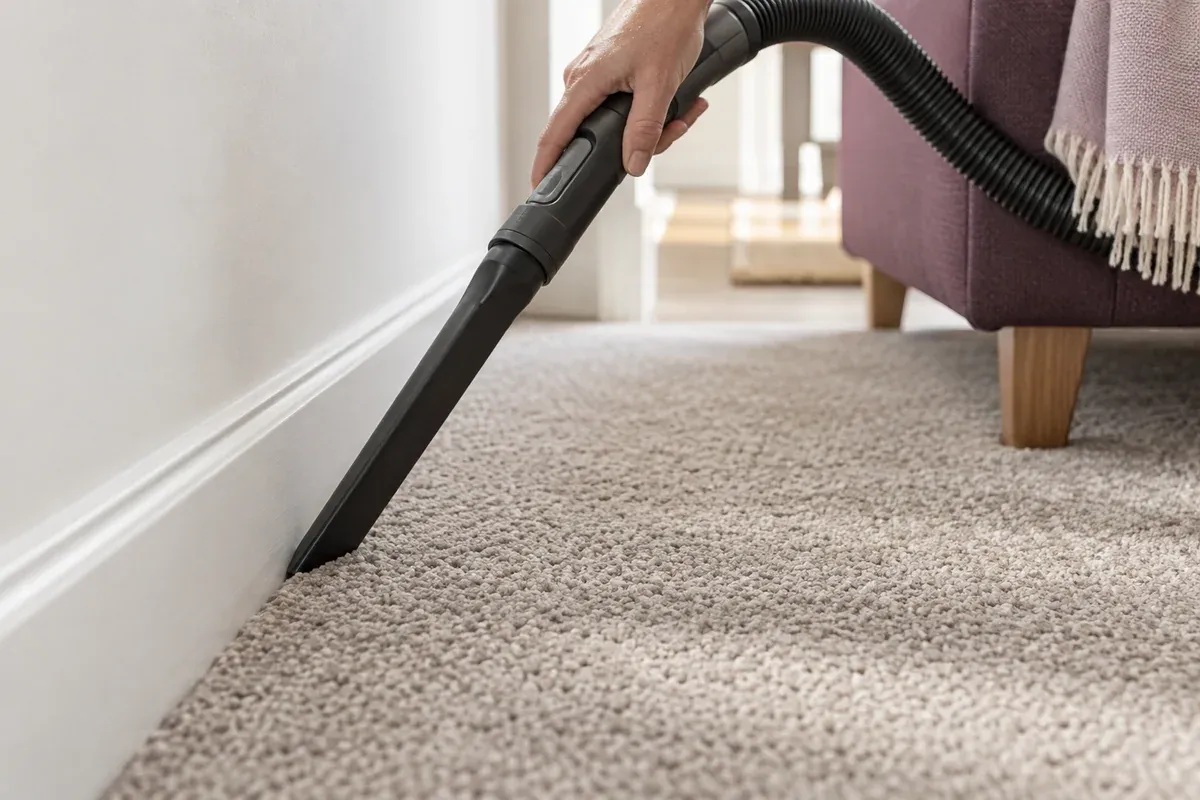
Vacuuming is an essential part of carpet care. Periodic deeper cleaning has a different role: addressing accumulated soiling within the pile. The Carpet Institute of Australia distinguishes routine maintenance from corrective cleaning and says the method should suit the carpet's construction and care instructions. Residential carpet-cleaning fact sheet.
That makes “remove the accumulated soil in these areas” a more useful booking request than “make the whole carpet look new”. Show the cleaner the areas you are concerned about, including places that receive less foot traffic for comparison.
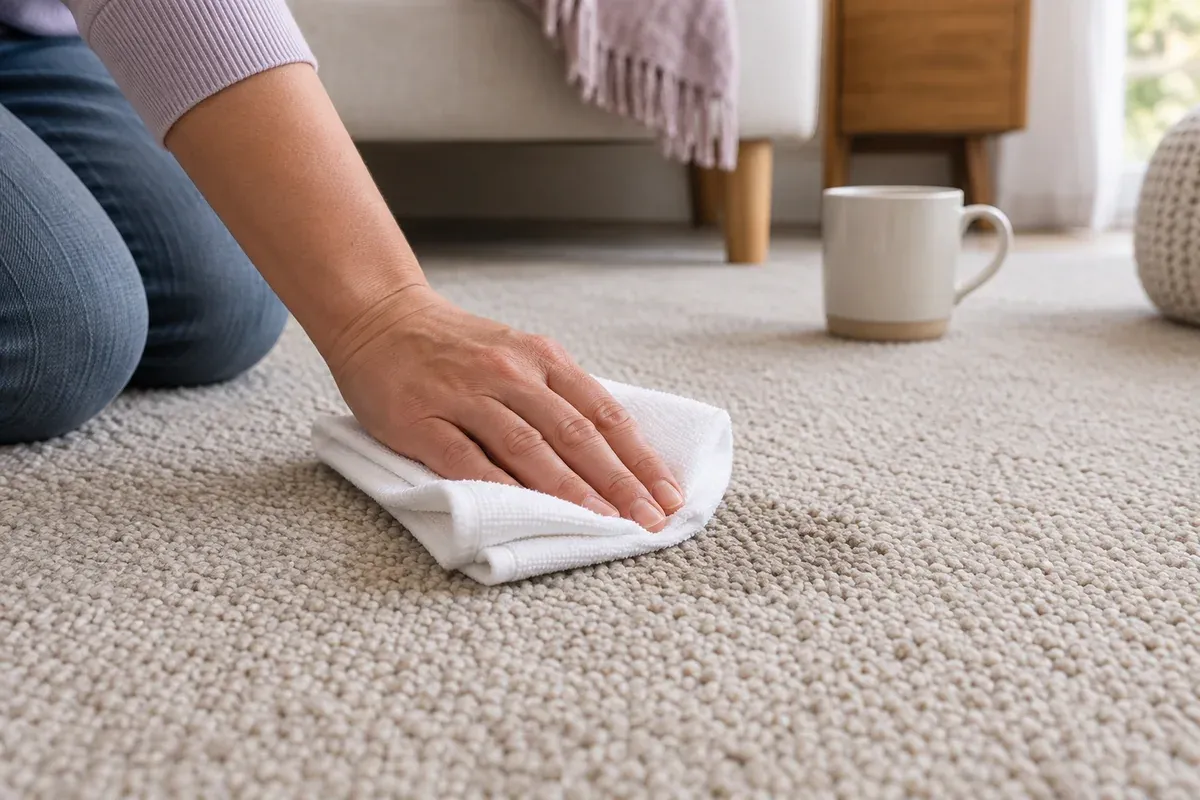
Assessing marks before choosing a treatment
A recurring dark patch is not automatically a permanent stain. Beaulieu Australia's care guide describes how detergent left behind after spot cleaning can attract more soil. It also describes pile reversal: changes in the direction of the pile that create lighter and darker patches. These need different explanations. Beaulieu Australia care guide.
Tell the cleaner what was spilled, when you noticed it and what you have already used. If you do not know, say so. The useful outcome of an assessment may be a treatment plan, a qualified expectation or advice that cleaning is unlikely to achieve your goal.
Matching the work to the carpet
Professional cleaning involves more than choosing a machine. The IICRC's published description of its carpet-cleaning standard includes evaluating carpet types and conditions, selecting methods, and inspecting before and after cleaning. That supports asking about the assessment as well as the treatment. IICRC S100 scope.
Ask: “What have you identified about this carpet, and why does the proposed method suit it?” If you have the manufacturer's care guide, share it. If the fibre is unknown, ask for identification before approving work. Natural-fibre carpets and rugs can need specialised care; do not assume the process used elsewhere in the house is suitable. Carpet and Rug Institute care guide.
Decide what you want the clean to achieve
Use this table to prepare questions, rather than to diagnose the carpet yourself.
What you notice | A useful question before booking |
|---|---|
A hallway looks duller than a spare room | “How much of this appears to be soil, and what might remain after cleaning?” |
Several marks have built up | “Can you assess these individually and explain which treatments are included?” |
A patch returns after spot cleaning | “Could earlier treatment be contributing? Here is what I used.” |
Light and dark areas change with viewing direction | “Could this be a pile appearance change rather than dirt?” |
You do not know the carpet fibre or care history | “Can you identify it and confirm a suitable method first?” |
Your main concern is the effort of doing it yourself | “What preparation will I still need to do, and what work does the service include?” |
For the last question, use our separate professional carpet cleaning versus a hire machine comparison. It helps you compare the work involved without treating every situation as a reason to book.
What cleaning may not fix
Some staining is permanent, and a change in appearance may reflect matting or physical fibre damage rather than removable soil. A cleaning result should not be presented as a repair. The Carpet and Rug Institute discusses these distinctions in its care guide. Carpet care and appearance changes.
If a particular mark is your main reason for booking, raise it before you agree to the job. Ask what improvement is realistic and whether any further assessment is needed. Do not leave that conversation until the cleaner has finished.
This guide does not promise allergy relief, disinfection or complete odour removal. Those claims need evidence specific to the problem and treatment. A standard cleaning booking should not be taken as a guarantee of those outcomes.
Copy this brief before requesting a quote
Send a short description with photographs. You do not need technical language; clear observations are more useful than guessing the cause.
Carpet assessment brief
- Areas: list the rooms, hallway and stairs you want assessed.
- Carpet information: manufacturer, range and fibre if known; otherwise write “unknown”.
- Main goal: describe the change you hope to see.
- Marks: note their location, known cause and approximate age.
- Previous treatment: name products or services already used, or attach a photograph of the product label.
- Access: note furniture, stairs, parking and building-access arrangements.
- Timing: explain when you need the rooms available again.
Ask the provider to confirm the proposed method, included areas, treatment limits, furniture arrangements, total quote and aftercare instructions. Keep that response with your booking details. This is a planning checklist, not a condition report.
For Simply Maid's current price factors, see the carpet-cleaning pricing guide. For the available service and scope, see carpet cleaning. Confirm the details for your home before booking.
How often should you consider professional cleaning?
Start with your carpet manufacturer's instructions, then account for its use and condition. The Carpet Institute gives 12–18 months as a typical residential deep-cleaning interval, while explicitly allowing for manufacturer requirements and actual soiling. It is a guide, not a compulsory timetable for every home. Carpet Institute maintenance guidance.
Record the date and method after a clean. Ask the technician what to watch for and when to reassess, rather than automatically repeating the same booking interval forever.
Between visits, continue suitable vacuuming and maintain entrance mats. The Institute's residential guidance identifies these as important ways to manage incoming soil. A professional visit does not replace that routine. Residential maintenance guidance.
Frequently asked questions
Is professional carpet cleaning worth it if I already vacuum?
It may be, when there is accumulated soiling or a problem that needs assessment. Vacuuming and corrective cleaning have different roles. Identify what you want improved and ask what the proposed treatment can realistically achieve.
Will every stain disappear?
No result should be promised before the carpet and marks have been assessed. Ask which marks may remain and whether extra treatment is included. For a recent spill, use the guidance appropriate to your carpet rather than waiting for a routine appointment.
Does “steam cleaning” suit every carpet?
No single method should be selected for every carpet. The Carpet Institute describes hot-water injection and extraction as a method often called steam cleaning, but directs readers to their manufacturer's instructions for suitability. Residential carpet-cleaning fact sheet.
How soon can I use the room afterwards?
Ask for instructions for the treatment being proposed and your home's conditions. Confirm when to walk on the carpet and return furniture before arranging your day. Our drying and aftercare guide covers the questions to resolve.
Related reading
Sources & references
- Carpet Institute of Australia: residential carpet-cleaning fact sheet — routine versus corrective care and manufacturer-led method selection.
- Carpet Institute of Australia: carpet maintenance — conditional scheduling guidance.
- Beaulieu Australia: care guide — residue-related soiling and pile appearance changes; not a treatment prescription for other manufacturers' products.
- IICRC: S100 public scope — assessment and inspection within professional cleaning. The full paid standard was not reviewed.
- Carpet and Rug Institute: care guide — natural-fibre care and the distinction between cleaning and appearance damage. US industry guidance used for material-care context, not Australian consumer law.
Change log
Who wrote and edited this article, when its sources were checked, and what changed.